
Homeowners
Solar panels, sized around your home
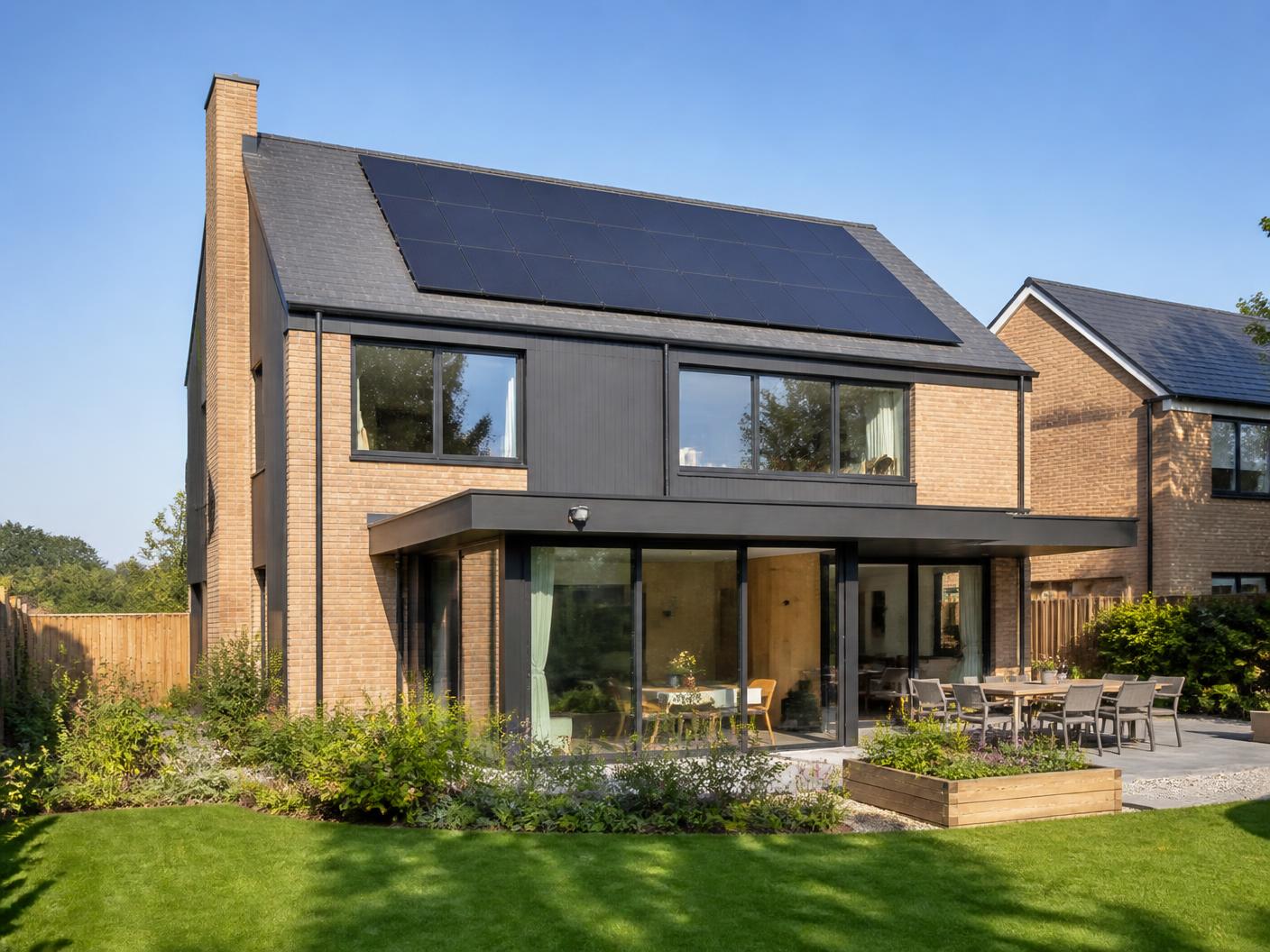
A solar system should be designed around your roof, your shading and how much electricity you actually use — not a one-size-fits-all package. We size it properly and install it through accredited UK installers.
Why solar
Turn your roof into a long-term asset
Properly sized design
We model generation against your real consumption so you buy the system you need, not the biggest one available.
Quality components
All-black panels, tier-one inverters and workmanship covered by insurance-backed warranties.
Clear pricing
One written proposal showing cost, expected generation and payback — with nothing hidden.
FAQs
Common questions
How it works
How solar actually works
Four simple stages between daylight landing on your roof and electricity powering the kettle.
- 1
Sunlight → panels
Daylight — not just direct sun — lands on the panels and produces DC electricity.
- 2
Inverter
The inverter converts DC into the AC electricity your home's circuits actually use.
- 3
Your home first
Anything running at that moment uses the solar electricity before the grid is touched.
- 4
Battery or grid
Surplus charges a battery where fitted, or is exported to the grid.
Everyday use
What can solar power?
Generation and demand have to line up in the same moment, so what solar covers changes through the day and the seasons.
Fridge and freezer
Constant background load that solar can cover during daylight.
Lighting and TV
Small but steady loads across the day.
Washing and dishwashing
Easy loads to shift into the middle of the day.
Cooking appliances
Higher, shorter bursts of demand.
Home office
Daytime working lines up well with daytime generation.
EV charging
Daytime charging can absorb a large share of surplus solar.
Heat pump
Electric heating demand that solar can partly offset.
Battery charging
Surplus stored for the evening rather than exported.
Availability at any moment depends on generation and what your home is using at that time.
Generation vs savings
Generation and savings are not the same thing
How much electricity your roof produces is one question. How much money that's worth to you is a different one — and it depends on how much of it you use yourself.
- How much you generate: roof area, orientation, pitch, shading, location, panel efficiency, system size and weather
- What it's worth: your electricity tariff, how much you use in daylight hours, battery storage, EV charging, a heat pump, your export tariff and the system cost
- Electricity you use yourself avoids a full unit rate; electricity you export usually earns less
- This is why two identical systems on two different homes can produce very different financial results
Illustrative model
See what your roof could do
Adjust the figures to see an illustrative picture of generation, self-consumption and export at your property.
Illustrative only
Estimated generation
3,600 kWh
Estimated electricity demand
3,600 kWh
Solar used directly
1,260 kWh
Shifted by battery
1,500 kWh
Estimated exported
840 kWh
Remaining grid import
840 kWh
Illustrative import avoided
£718
Illustrative export value
£101
Illustrative total annual benefit
£818
Illustrative only and not a quotation, forecast or guarantee. Figures use simplified assumptions (around 900 kWh per kWp per year and typical self-consumption patterns) and ignore system cost, finance, degradation, standing charges and VAT. Actual generation, self-consumption, tariffs, export rates and savings vary by property, design, usage and supplier, and tariffs can change.
Combinations
Solar works harder alongside other technology
Solar + battery
Store daytime surplus and use it in the evening instead of exporting it, increasing how much of your own generation you use.
Solar + EV
An EV is a large, flexible load. Charging during daylight can absorb generation that would otherwise be exported.
Solar + heat pump
A heat pump raises electrical demand, and solar can generate part of that electricity — particularly in the shoulder seasons.
What happens next
From first conversation to switch-on
- 1
Tell us about your home
Property type, roof, electricity use and what you're hoping to achieve.
- 2
Desktop assessment
We review roof area, orientation, shading and your consumption to size a sensible system.
- 3
Recommendation and pricing
A written proposal showing system size, estimated generation, cost and funding options.
- 4
Technical survey
An accredited installer partner checks roof structure, electrics and access.
- 5
Final design
Layout, equipment and any changes confirmed before anything is ordered.
- 6
Installation
Typically one to two days on site for a domestic system.
- 7
Handover and paperwork
Commissioning, monitoring set-up, certification and export application support.
Roof check
Is my roof suitable?
Select anything that applies to your roof.
A desktop assessment and technical survey confirm what's actually possible on your property.
Why Simply Renewables
No one-size-fits-all energy system
Renewable energy is full of products, installers, tariffs, grants and technical jargon. We help you understand the options and find a route that suits your property.
Clear, jargon-free recommendations
We explain what each option could realistically do for your property — and what it can't.
More than one technology
Solar, battery storage and heat pumps, considered together rather than sold in isolation.
Funding routes reviewed
Purchase, finance and grant routes compared where you're eligible. For businesses, fully funded PPA electricity could be as low as 8p/kWh, subject to site assessment and funder approval.
Accredited installer partners
Installation is delivered through appropriately accredited installer partners.
Homes, businesses and park homes
Different property types need different answers. We work across all of them.
Support through the process
From first assessment to handover, you have one point of contact.
Accreditations such as MCS, RECC, HIES and TrustMark are held by our installer partners; installation is delivered through appropriately accredited installer partners.
Not sure where to start?
Tell us about your home and we'll come back with a sensible, properly sized recommendation — free and with no obligation.
Ready to make energy simpler?
Free, no-obligation advice from a UK-based team.