
Homeowners
Battery storage that pays its way
A battery lets you keep the energy you generate and charge up cheaply overnight, so you buy far less electricity at peak rates. It works with new solar or alongside an existing system.
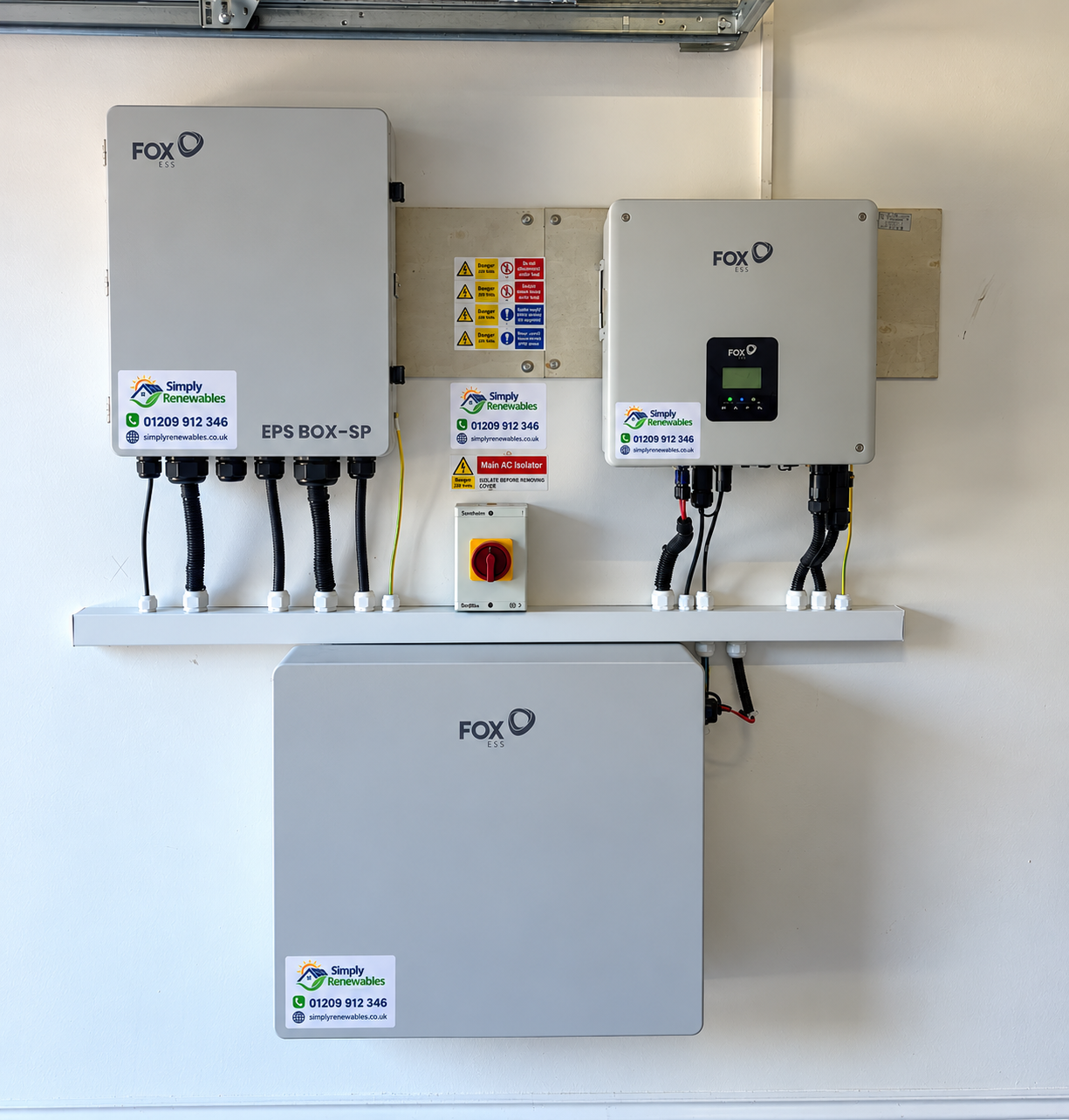
Battery benefits
Buy low. Use high.
Use more of your own energy
Typical homes use under half their solar directly. A battery pushes that far higher.
Tariff arbitrage
Charge overnight on a cheap EV or time-of-use tariff and run the house on it during peak hours.
Sized to your usage
We match capacity to your evening load rather than overselling kilowatt-hours you'll never cycle.
FAQs
Common questions
With solar
Store energy. Use it when it suits you.
With solar, a battery's job is to stop surplus generation leaving the property for less than it's worth to you.
- 1
Solar generates
Daytime generation supplies whatever your home is using at the time.
- 2
Surplus charges the battery
Anything spare tops up storage instead of going straight to the grid.
- 3
Evening use
The house runs on stored electricity when generation has stopped.
- 4
Export what's left
Once the battery is full, surplus can still be exported.
Without solar
You don't necessarily need solar to benefit from a battery
On a suitable time-of-use tariff, a battery can shift when you buy electricity rather than how much you generate.
- 1
Off-peak grid
The battery charges during a cheaper tariff window overnight.
- 2
Stored
That electricity sits ready for the rest of the day.
- 3
Higher-rate periods
The home draws from the battery instead of buying at peak rates.
- 4
Repeat daily
The pattern repeats as long as the tariff and equipment support it.
Subject to a compatible time-of-use tariff, compatible equipment and correct configuration. Tariff availability and rates vary by supplier and can change.
The job it does
What does a battery actually do?
Stores excess solar
Keeps generation on site instead of exporting it at a lower value.
Shifts when you buy
Moves grid purchases into cheaper periods where your tariff allows.
Reduces peak imports
Cuts how much you buy during the most expensive hours.
Supports EV charging
Forms part of a wider home energy strategy alongside a charger.
Works with smart tariffs
Compatible systems can respond automatically to tariff periods.
Raises self-consumption
You use more of what your own roof produced.
Illustrative guide
Size my battery
There is no universal right answer. This gives a rough starting point — a proper assessment looks at your consumption profile, tariff, solar surplus and future plans.
Illustrative only
Typical starting point
6 kWh
Around 10 kWh of electricity is used per day on these figures, with roughly 40% of it outside daylight hours. Battery capacity is usually chosen to cover a useful share of that, not all of it.
Get a proper battery assessmentIllustrative only. Battery sizing depends on your consumption profile, solar surplus, tariff, EV and heating demand, desired resilience and budget. Usable capacity, charge and discharge rates and warranty terms vary by product.
Examples, not recommendations
How big should my battery be?
These are illustrative capacity bands to help you picture the scale — not a recommendation for your home.
Around 5 kWh
Smaller homes or modest evening demand, often paired with a smaller solar array.
Around 10 kWh
A common size for family homes with typical evening and overnight use.
Around 15 kWh
Higher consumption, an EV, or a preference to ride through most of the evening on storage.
20 kWh and above
High consumption homes, heat pumps, multiple EVs or resilience requirements.
Illustrative bands only. Correct sizing comes from your consumption profile, tariff, solar surplus, future plans and budget.
Retrofit
Can I add a battery to existing solar?
Often, yes. Where a battery can't share the existing inverter, an AC-coupled battery adds its own conversion so the original system carries on unchanged.
- Existing inverter and its age and compatibility are checked first
- AC-coupled batteries can be added alongside most working systems
- Space, ventilation, temperature and cable routes affect where it can go
- Your export arrangement and metering may need updating
Important
What happens during a power cut?
Not all battery systems automatically provide backup power. It is a design decision, not a standard feature.
Equipment
The inverter or battery must specifically support backup (often called EPS).
Design
Backup has to be planned in — it changes how the system is configured.
Circuits
Usually only selected circuits are backed up, not the whole property.
Installation
Additional switching and wiring is required for a safe changeover.
If continuity of supply matters at your property, tell us at the assessment stage so it can be designed in from the start.
Why Simply Renewables
No one-size-fits-all energy system
Renewable energy is full of products, installers, tariffs, grants and technical jargon. We help you understand the options and find a route that suits your property.
Clear, jargon-free recommendations
We explain what each option could realistically do for your property — and what it can't.
More than one technology
Solar, battery storage and heat pumps, considered together rather than sold in isolation.
Funding routes reviewed
Purchase, finance and grant routes compared where you're eligible. For businesses, fully funded PPA electricity could be as low as 8p/kWh, subject to site assessment and funder approval.
Accredited installer partners
Installation is delivered through appropriately accredited installer partners.
Homes, businesses and park homes
Different property types need different answers. We work across all of them.
Support through the process
From first assessment to handover, you have one point of contact.
Accreditations such as MCS, RECC, HIES and TrustMark are held by our installer partners; installation is delivered through appropriately accredited installer partners.
Find the right battery for your home
We'll look at your consumption, tariff and any existing solar, then recommend a sensible capacity — free and with no obligation.
Ready to make energy simpler?
Free, no-obligation advice from a UK-based team.