
Homeowners
Air source heat pumps done properly
A heat pump only works well when the home, the radiators and the system are assessed together. We do that first, then tell you honestly whether it's the right move.
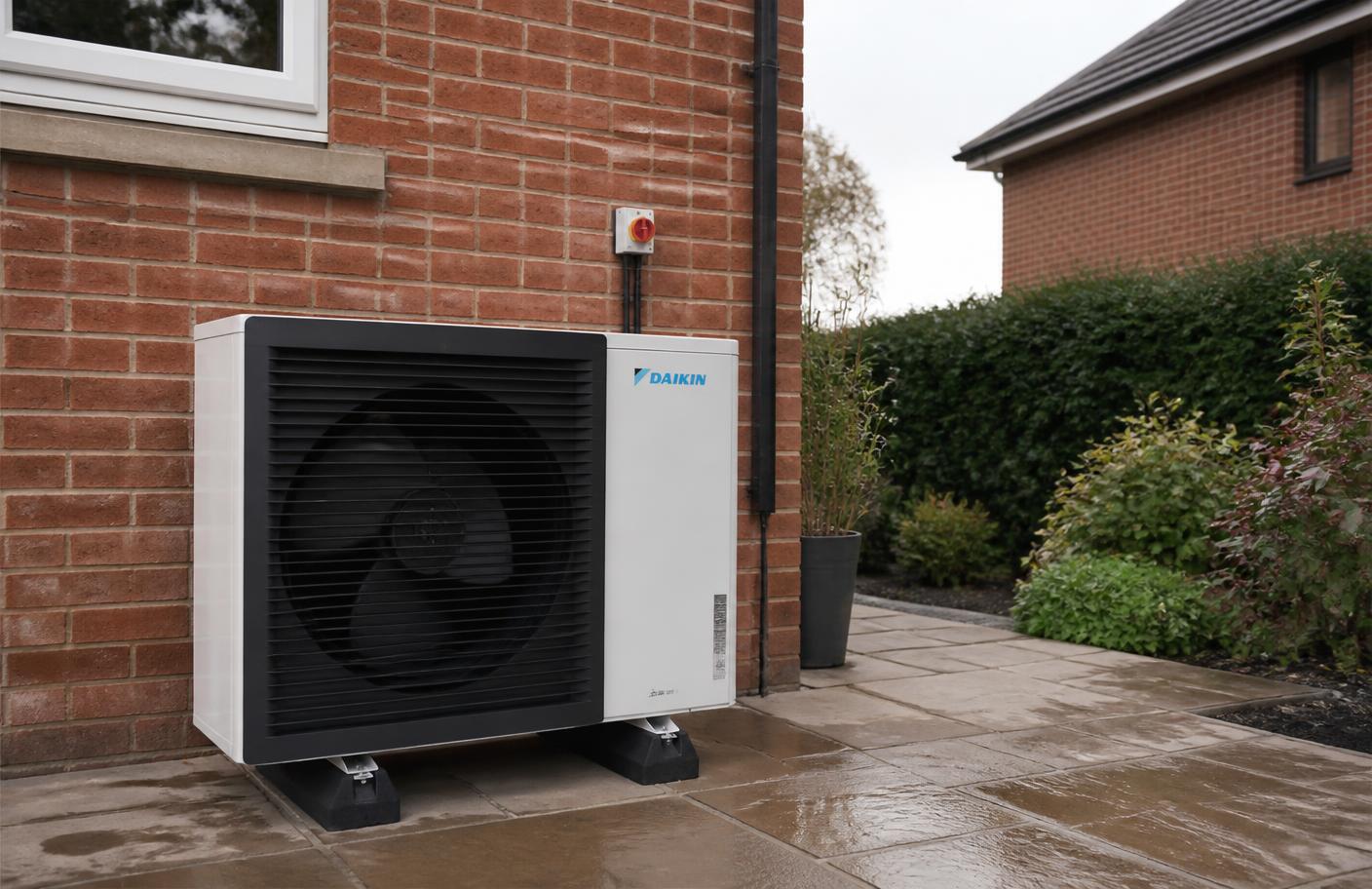
Efficiency
More heat out than electricity in
Heat pumps move heat rather than generating all their heat directly, allowing a correctly designed system to deliver multiple units of heat for every unit of electricity consumed.
*Illustrative coefficient of performance. Actual seasonal efficiency varies according to outside temperature, flow temperature, property heat loss, system design, controls and usage.
Heat loss survey first
Every recommendation starts from a room-by-room heat loss calculation, not a guess.
Grant routes
Where you qualify, government-backed funding can cover a significant share of the cost.
Running cost clarity
We show projected running costs against your current fuel before you commit.
FAQs
Common questions
Start here
What do you heat your home with today?
The case for a heat pump looks very different depending on what you're replacing.
Moving from LPG to a heat pump
LPG households often feel fuel costs and delivery logistics most keenly, which is why this is one of the most common switches we assess.
- No more LPG deliveries to schedule or run out of
- No ongoing dependency on a tank where it's removed
- One electric heating system with modern controls
- Can be paired with solar to generate part of the electricity used
- Government support may be available where you qualify
Comfort
Will my home actually stay warm?
Warmth is a design outcome, not a product feature. These are the things that decide it.
Heat-loss calculation
Room-by-room assessment of how much heat your home needs.
Emitter sizing
Radiators or underfloor sized for the design flow temperature.
Flow temperature
Lower flow temperatures run more efficiently but need the right emitters.
System design
Pipework, cylinder and unit sizing all affect performance.
Insulation
Reducing heat loss reduces the size and cost of the system needed.
Controls
Good controls keep the system running steadily rather than in bursts.
Sound
How loud is a heat pump?
There's no single honest number to quote, because the same unit sounds different in different situations. What we can do is assess it properly for your property.
- The model and its rated sound power
- How hard the unit is working at the time
- Outside temperature and operating conditions
- Distance from windows, doors and boundaries
- Where and how it's mounted
- Surrounding surfaces, walls and fences
Siting
Where does the outdoor unit go?
Airflow
Clear space around the unit so it can breathe properly.
Access
Room to service and maintain it safely.
Pipe runs
Sensible distance to the cylinder and heating circuit.
Neighbours
Distance from neighbouring properties and their windows.
Boundaries
Permitted development conditions may apply to position and distance.
Noise
Position chosen to reduce noise where people spend time.
Better together
Heat pump + solar
A heat pump moves your heating onto electricity. Solar generates electricity at your property — so the two are natural partners, particularly in spring and autumn.
- Solar can supply part of the electricity your heating uses
- Battery storage may help where demand sits outside daylight hours
- Designing both together avoids paying twice for electrical work
- Sizing considers heating demand alongside everyday consumption
Process
What happens next
- 1
Tell us about your home
Property type, current heating, fuel and any known insulation work.
- 2
Initial assessment
We check whether a heat pump is a sensible route and what funding may apply.
- 3
Heat-loss survey
A room-by-room calculation from an accredited installer partner.
- 4
Design and proposal
Unit, cylinder, emitters, flow temperature, cost and funding set out in writing.
- 5
Installation
Scheduled by the installer partner, with the programme agreed in advance.
- 6
Commissioning and handover
System balanced, controls explained and paperwork completed.
Why Simply Renewables
No one-size-fits-all energy system
Renewable energy is full of products, installers, tariffs, grants and technical jargon. We help you understand the options and find a route that suits your property.
Clear, jargon-free recommendations
We explain what each option could realistically do for your property — and what it can't.
More than one technology
Solar, battery storage and heat pumps, considered together rather than sold in isolation.
Funding routes reviewed
Purchase, finance and grant routes compared where you're eligible. For businesses, fully funded PPA electricity could be as low as 8p/kWh, subject to site assessment and funder approval.
Accredited installer partners
Installation is delivered through appropriately accredited installer partners.
Homes, businesses and park homes
Different property types need different answers. We work across all of them.
Support through the process
From first assessment to handover, you have one point of contact.
Accreditations such as MCS, RECC, HIES and TrustMark are held by our installer partners; installation is delivered through appropriately accredited installer partners.
Find out whether a heat pump suits your home
A free, no-obligation assessment covering suitability, likely design and any funding you may be eligible for.
Ready to make energy simpler?
Free, no-obligation advice from a UK-based team.